
Ireland’s Neolithic Age
Newgrange Meath
Newgrange Ireland
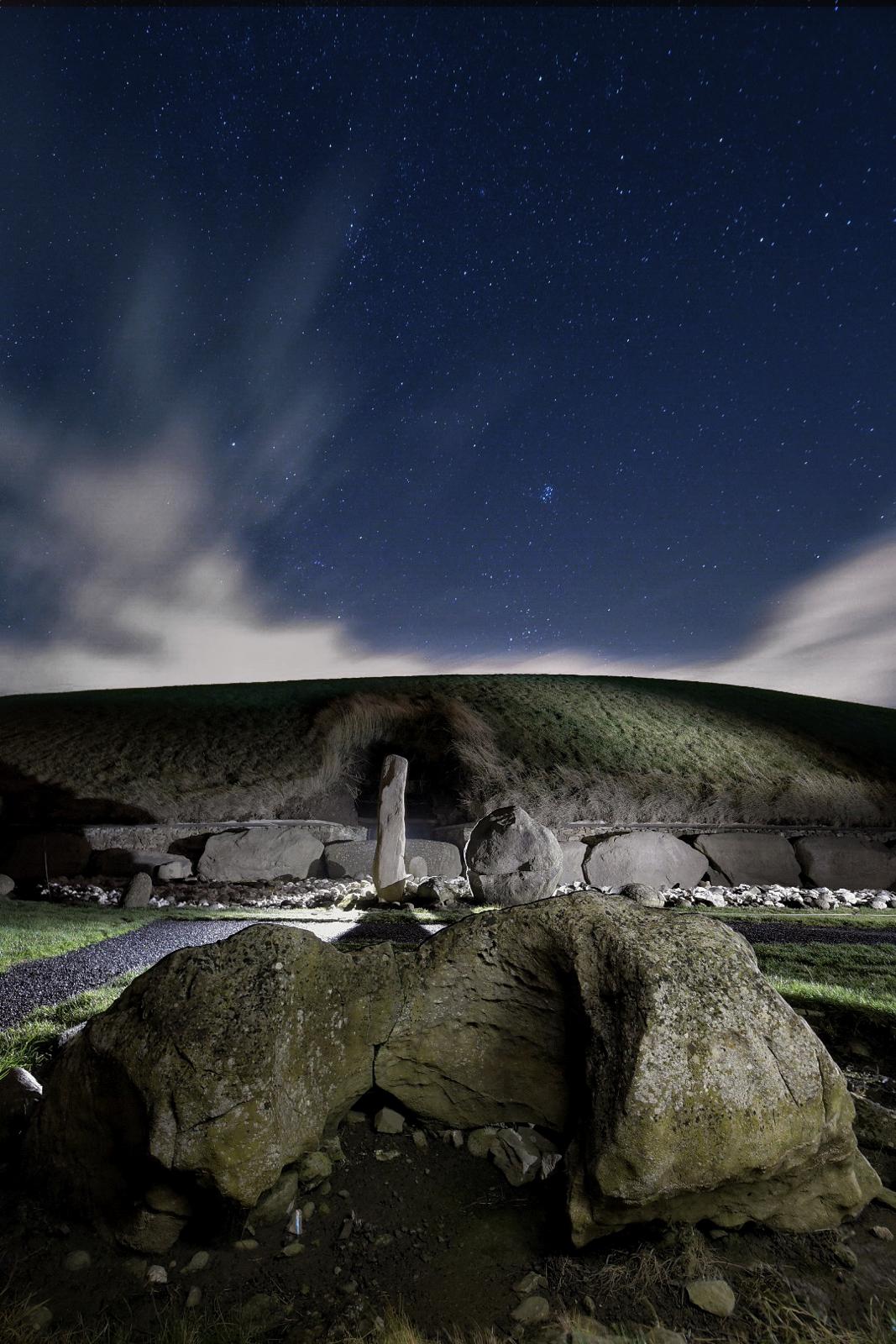
Newgrange is one of Ireland’s most remarkable prehistoric sites, a Neolithic passage tomb that predates both Stonehenge and the Great Pyramids of Giza by centuries. Built around 3200 BC by early farming communities, the monument stands in the lush landscape of the Boyne Valley as a testament to the ingenuity, spirituality, and architectural skill of its builders.
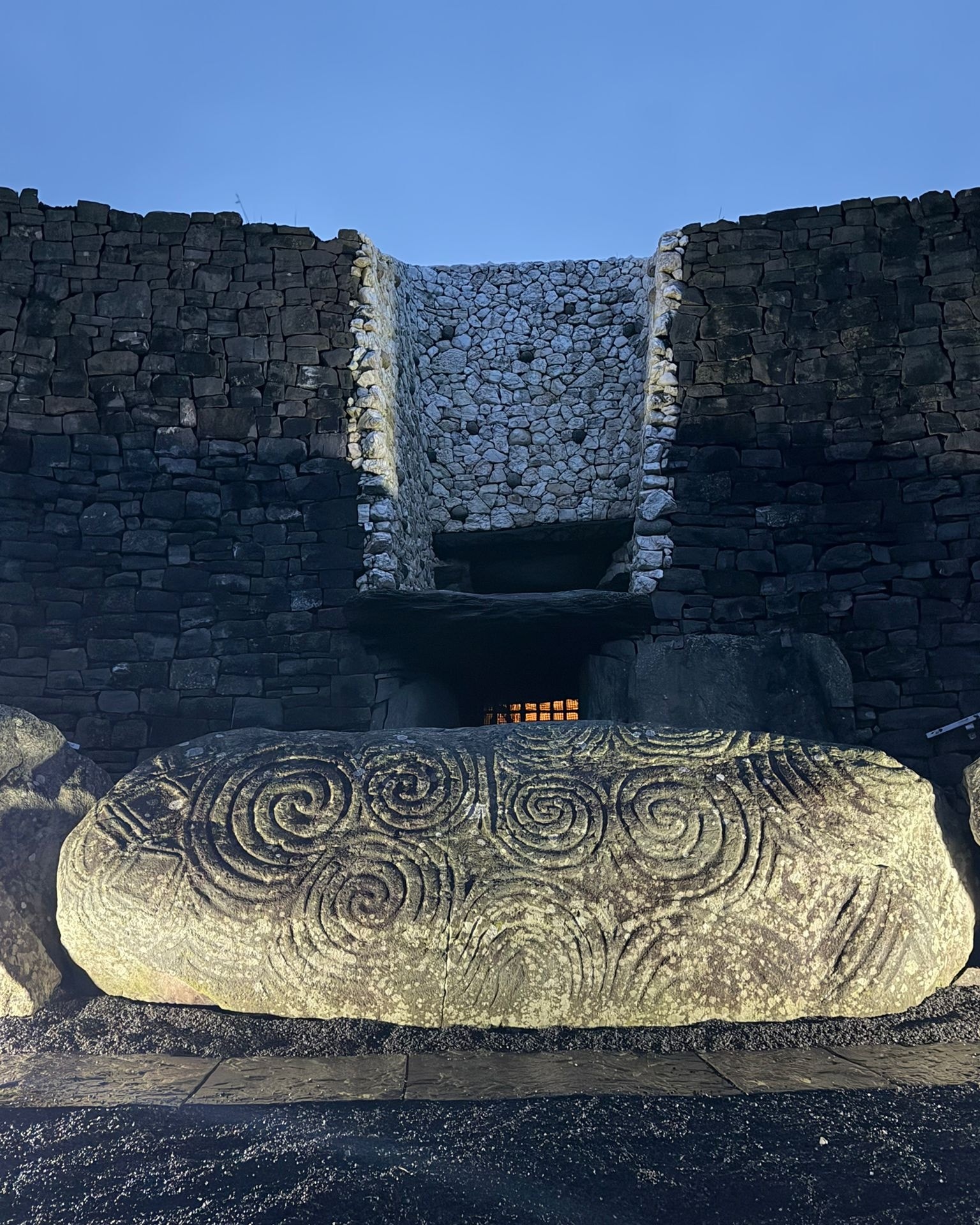
A massive circular mound more than 85 meters wide and 13 meters high conceals a narrow passage leading to a central chamber with alcoves. Around 97 carved stones once framed the mound, many of them etched with complex spirals, zigzags, and geometric motifs that continue to fascinate archaeologists and visitors alike.
One of Newgrange’s most extraordinary features is its precise alignment with the winter solstice sunrise. For a few minutes each year around December 21, sunlight enters a narrow roof box above the entrance, illuminating the inner chamber’s heart in a breathtaking display of ancient astronomical knowledge.
Access to the passage tomb is only possible via guided tours that begin at the Brú na Bóinne Visitor Centre in Donore, where expert guides bring the story of Newgrange and its place in early European history to life.
Standing at Newgrange is more than seeing stones and earth. It is an invitation to imagine life in Ireland five millennia ago, to ponder how people built beyond mere survival, and to connect with rituals, cycles, and beliefs that brought meaning to their world and ours.
5 Things to Know about Newgrange, Brú na Bóinne
- Newgrange was built around 3200 BC, making it older than both Stonehenge and the Great Pyramids of Giza.
- The monument’s passage and chamber are aligned so that the winter solstice sunrise shines directly into the inner chamber.
- Newgrange was constructed long before metal tools were used, yet its stones were precisely placed with astronomical intent.
- Intricate carvings featuring spirals and geometric art cover many stones, a form of megalithic art unique to the site.
- Access to the tomb is only via guided tour from the Brú na Bóinne Visitor Centre, ensuring stories and context accompany every visit.
“Geometry did not begin on the banks of the Nile; it began on the banks of the Boyne”
Newgrange and Knowth
Megalithic Passage Tomb
Brú na Bóinne
Have questions about Newgrange and Knowth?
Our luxury Irish travel designers are ready to help and answer your questions before you visit.